Published on .
CMS is accelerating its move from process-heavy Star measures to outcomes that reflect real improvements in member health.
MA plans that chase measure-by-measure adjustments may gain short-term points. But plans that strengthen the clinical foundation of their population will outperform long term.
And that foundation for ongoing success? Medication adherence.
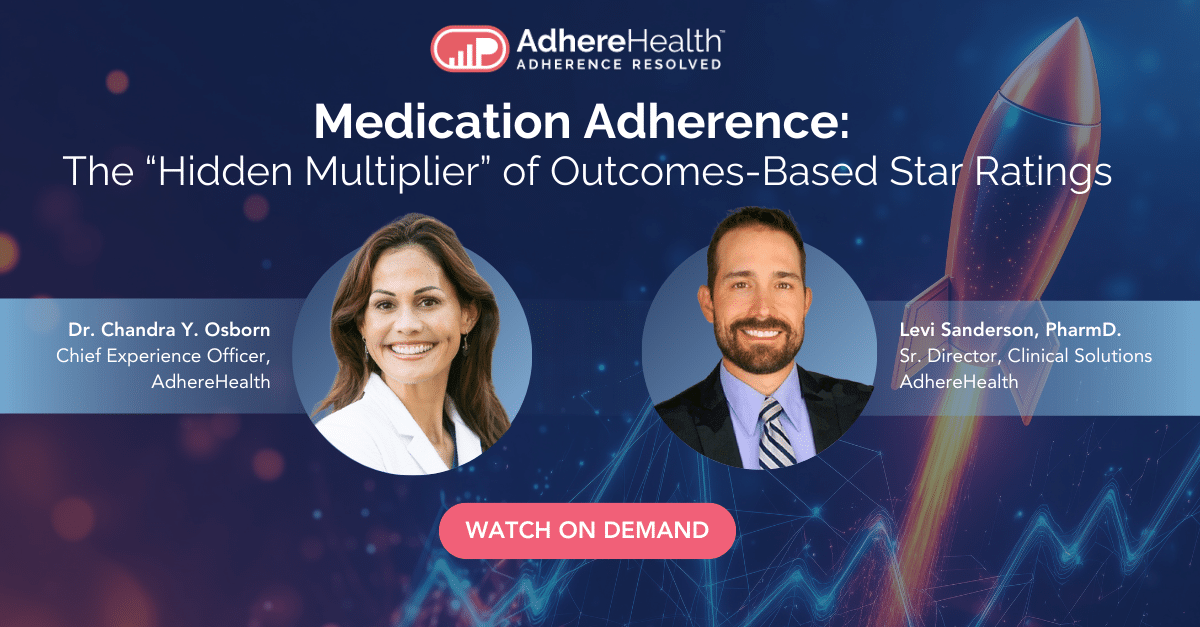
In a recent webinar, Dr. Chandra Y. Osborn, Chief Experience Officer at AdhereHealth, and Dr. Levi Sanderson, Senior Director of Clinical Solutions, explained why adherence is the “hidden multiplier” behind sustained Star success in an outcomes-first environment—and how a focus on adherence will put health plans on the path toward future success within the Star Ratings system.
Learn more about building a winning adherence strategy – watch our webinar replay on demand
Medication Adherence Drives Clinical Outcomes—and Multiplies Stars Performance
Why is medication adherence a critical ingredient in successful Star Ratings for health plans? It all comes down to clinical outcomes.
“From a clinical standpoint, adherence is one of the strongest predictors of outcomes in high-risk chronic conditions,” Sanderson explained. When members take medications as prescribed, blood pressure stabilizes. A1c improves. LDL decreases. Disease progression slows.
And those clinical gains influence far more than the three core adherence measures. They also affect:
- Hospitalization and ED utilization
- Risk adjustment and cost stability
- Related HEDIS and intermediate outcome measures
- Patient safety indicators
- CAHPS and member experience scores
That’s because healthier, more stable members engage more confidently with their care. They experience fewer crises. They report better experiences. This expands the impact of medication adherence throughout the Star Ratings and leads to higher overall Stars.
In fact, a 2025 study indicated that among Medicare Advantage plans earning at least 4 Stars on adherence measures, more than 70% also achieve an overall 4-Star rating or higher. Not because of weighting—but because adherence improves the underlying health of the population.
That’s the “hidden multiplier” effect.
A Real Challenge: Behavior Change in the Real World
Despite its critical importance in the health of members, adherence remains a hurdle that health plans continue to struggle with. Improving adherence is a multi-faceted challenge that isn’t just about sending reminders. It’s about understanding what it feels like to walk out of a doctor’s office with a new chronic diagnosis and five behavior changes to make at once.
“When everything feels urgent, it can become paralyzing,” Osborn shared. “People don’t know where to start.”
Cognitive load, competing priorities and social risk all influence whether a member fills and consistently takes a prescription. That’s why adherence cannot be treated as a seasonal initiative or a year-end scramble. Chronic conditions don’t pause while the healthcare system evolves. The effort must be consistent, proactive and human-centered.
“Adherence is ongoing. Its impact is cumulative and compounding,” Osborn emphasized. “You can’t turn those efforts on and off as changes occur within the Star Ratings—for the best results, it’s critical to invest in adherence on a continuous basis.”
What Works in an Outcomes-First Environment
Plans that succeed in the new Stars landscape must maintain momentum when it comes to adherence, because the diseases that need to be addressed won’t pause for plan year shifts. Plans need a coordinated adherence strategy that includes the following components:
- Predictive analytics to identify risk early
- Omnichannel outreach tailored to member preferences
- Behavioral science–based interventions that reduce friction
- Alignment with prescribers and pharmacies
- Ongoing support that builds trust over time
By incorporating these powerful support mechanisms and developing a long-term focus, plans can boost adherence—especially in the highest-risk and hardest-to-engage members. It’s a strategic move plans can’t afford to miss.
Get Started Now to Make Adherence Improvements: Watch the Full Conversation
As health plans continue to play the “long game” when it comes to the health of members, medication adherence remains one of the most powerful levers to be pulled that improves clinical stability and protects performance.
And when adherence improves, the ripple effects are measurable: fewer acute events, improved member experience, reduced cost of care and stronger overall Stars. As a “hidden multiplier” for health plans, adherence is one of the strongest predictors of future Stars performance, regardless of what’s next for Medicare Advantage.
Looking to drive adherence improvements within your member population? Check out our webinar replay for the full conversation, detailed action steps and more!